
Winchester City Deed Records and Their Role
The Clerk of the Circuit Court for the City of Winchester holds the Winchester City deed records. That office is the recorder for the city. A recorded deed carries the conveyance terms and the legal description. The deed itself is the authority. The Clerk also records deeds of trust, releases, liens, judgments, plats, and wills. An assessment card or GIS popup can hint at a parcel's history. Neither replaces the recorded deed's terms.
| Deed Type | What It Does | Common Use |
|---|---|---|
| Conveyance deed | Names the parties and describes the land interest conveyed | Confirm a recorded transfer |
| Fiduciary or estate deed | Shows a transfer signed by an executor or administrator | Follow a probate-related ownership change |
| Deed of trust | Records a security instrument tied to real property | Check a recorded financing interest |
| Release or satisfaction | Records a later release of an interest or claim | Match a release to the earlier instrument |
| Plat | Records a mapped lot, street, easement, or subdivision reference | Connect a legal description to its mapped layout |
A deed is not the same thing as a deed of trust. The first records a sale. The second secures a debt or states a lender's claim. A release works differently still. It is a later instrument that clears an interest, and it never edits the page it modifies. Because index results can look nearly identical, read the document type and the legal description closely. Then decide whether two entries describe one conveyance or two separate transactions.
Winchester SRA Index and Images Are Separate
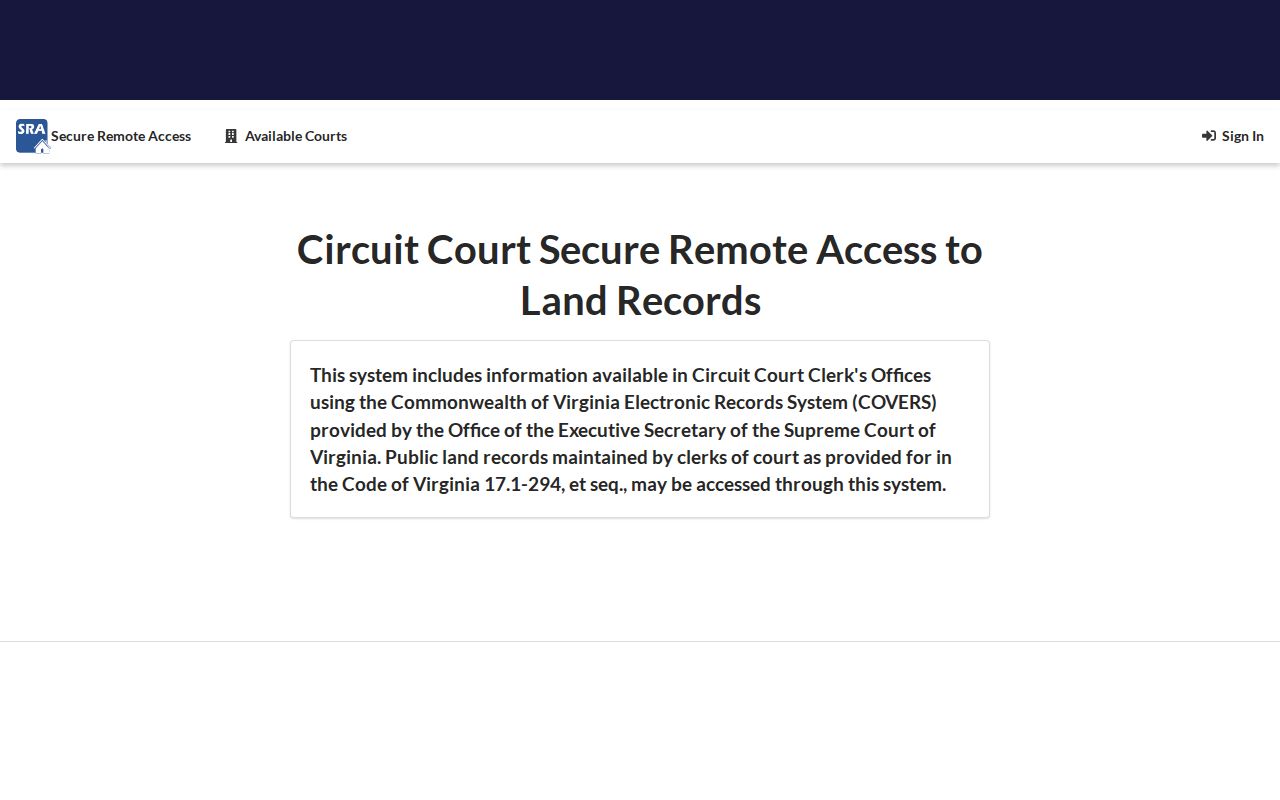
The Clerk's local website points to Virginia Secure Remote Access for circuit-court land records. A free index may exist if the Clerk has enabled one for Winchester City. Images are another matter. The state platform typically requires a subscription agreement and payment before a document image opens. The Clerk publishes no stated starting year or search fields for the local index. Confirm both directly. Do not borrow a cutoff from Frederick County or another city. What if an entry appears but the image will not load? Use the Clerk's counter, or ask which subscription route applies. The courthouse also remains the fallback for older deed books. Some records are not enabled for remote access. Keep in mind that an index entry can confirm a recording. It may not show the full terms, signatures, exhibits, or legal description. The Virginia SRA land-record access page explains the statewide access model. It does not establish what Winchester has enabled today.
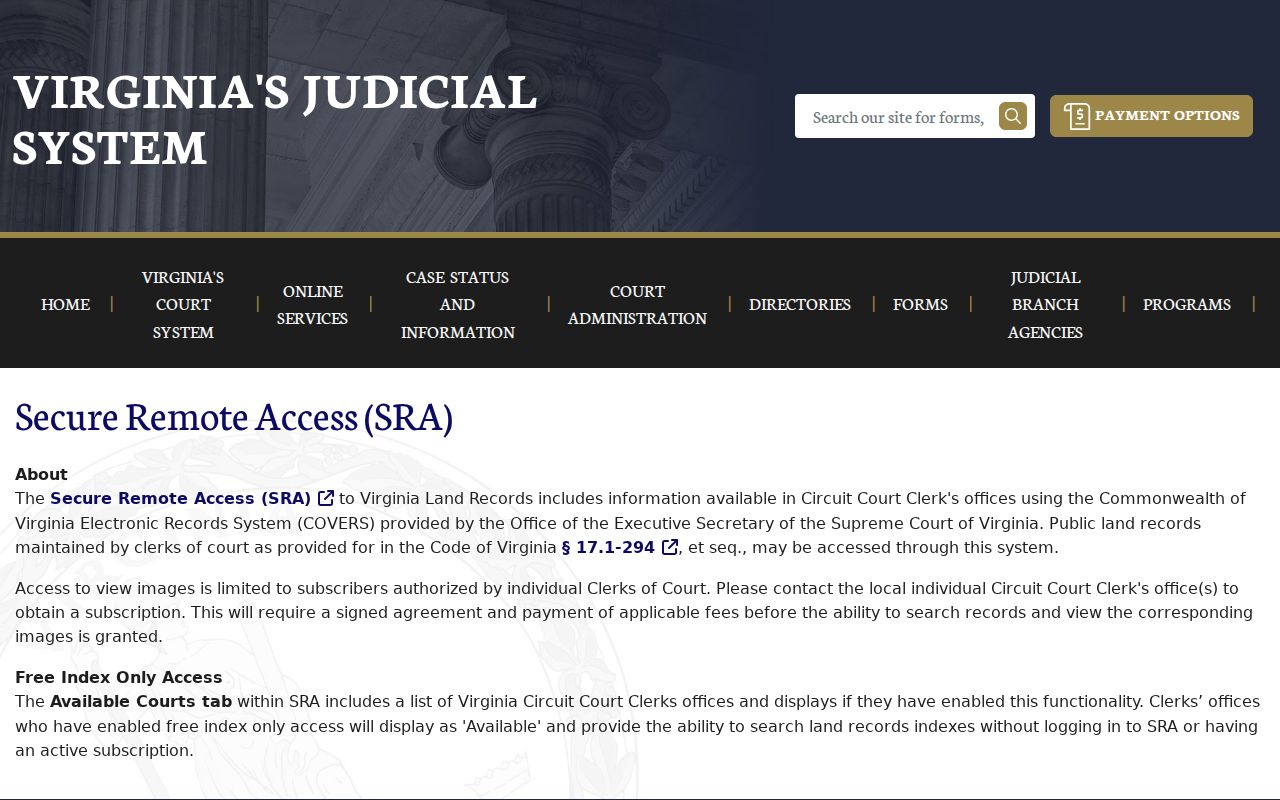
The SRA access screen keeps the index view and the image path clearly apart. The statewide Virginia Judiciary online-services hub links to separate tools for land-record access, case information, and deed alerts.
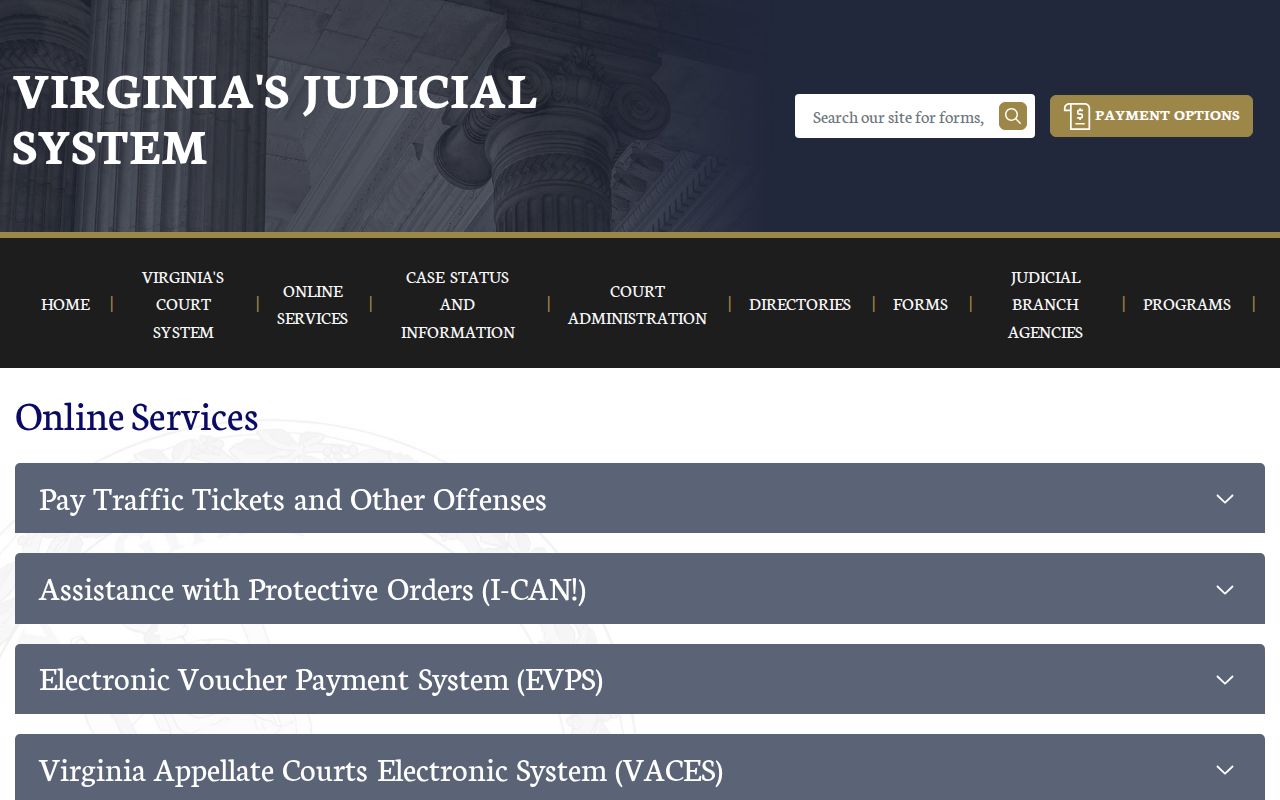
Choose the land-record route for deeds and the case-information route for covered court dockets.
Winchester's Clerk Keeps Separate Localities
The Clerk's public site serves two localities at once: Winchester City and Frederick County. Both share the Joint Judicial Center. The locality named on the land record decides which index you search. The shared building does not. That distinction trips people up. A "Winchester" postal address can sit outside the city entirely. Confirm the corporate limit in City GIS and read the legal locality on the deed before filing an in-person or written request. Annexation adds another wrinkle. The City holds annexation records for 1905 and for 1970 to 1971. Official sources describe the larger boundary change using 1971 or 1974. An older deed may therefore carry a Frederick County legal description. That land now lies inside Winchester City. Follow the deed's legal description and the relevant annexation file rather than trusting the current street label.
Follow Winchester City's Grantor-Grantee Trail
A Winchester City deed index tracks two parties plus the instrument itself. The grantor gives up an interest. The grantee takes it. Chain those instruments together for a single parcel and you have the chain of title. Start from any deed you already hold. Then mine its names and prior references to walk the index further back through Winchester land records. The online form's dropdown options can change. So confirm the current search controls on the SRA page before relying on them.
- Locate the most recent conveyance using the assessment owner as a grantee search clue.
- Read the grantor, grantee, recording date, legal description, and any prior instrument reference from the image.
- Search the prior grantor as a grantee to find the instrument by which that party acquired the parcel.
- Repeat and compare lot, tract, acreage, and book or instrument references at each step.
- When the online range ends, ask the Clerk about the older book or index, then check Handley and Library of Virginia finding aids.
- Grantor
- The person or entity conveying an interest in the instrument.
- Grantee
- The person or entity receiving the interest described in the instrument.
- Chain of title
- The sequence of recorded transfers and related instruments for a parcel.
- Book and page
- A volume-and-page reference; Winchester's current online reference style should be checked on the record.
- Instrument number
- A document identifier where the clerk's system uses one; exact local display was not verified.
Estate and Court Transfers Need a Branch
Not every Winchester City deed passes between willing buyers and sellers. A chain of title can run through an executor or an administrator. It can also pass through a trustee, a partition, or a court-ordered sale. When a grantee shows up as an estate or fiduciary, pull the Winchester probate file. That file confirms the authority to act. Then locate the fiduciary deed or distribution instrument in the land records. A will may state intent. But the recorded conveyance and its court order are what establish the transfer trail.
Litigation adds another layer. Foreclosure, quiet-title, partition, and mechanic's-lien cases all leave records beside the land index. Virginia OCIS lists some case information, yet it does not expose every filing. Pull the case number and request the Clerk's full public file. Check the land-record index too for a lis pendens, sale deed, release, or judgment. General searches will not reach sealed or restricted material. For covered cases the Virginia Online Case Information System offers a separate docket search.
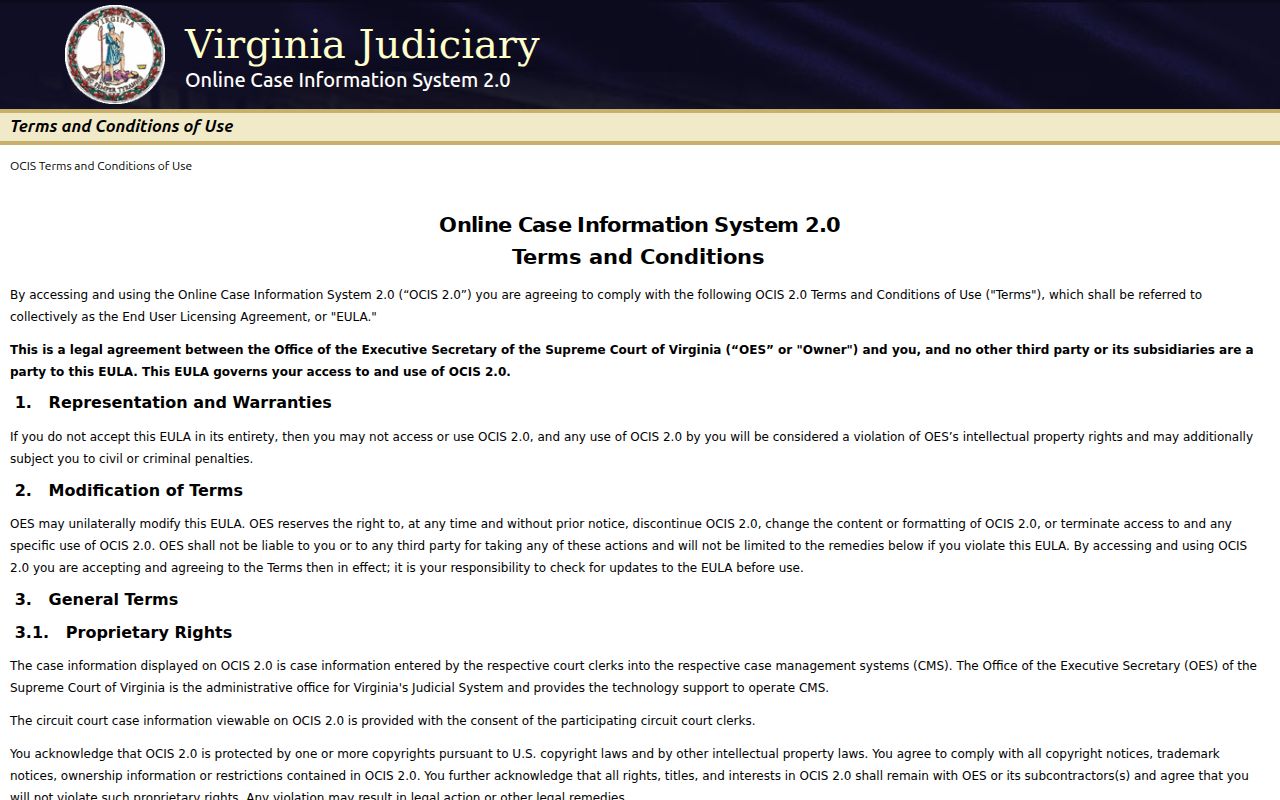
Take the result, order the public case file, then trace any land instrument through the Clerk's deed index.
Winchester's Older Land Trail Is Split Across Reels
Winchester's older land trail is scattered. The Library of Virginia's Winchester City catalog places vendor and vendee liens and contracts from 1890 to 1902 on reel 1, with city and court records on other reels. Handley Archives holds something different: selected deeds and partition material from 1948 to 1963, city maps, and local tax books. Neither collection is a continuous deed index.
Handley's Winchester City Records collection also covers real-estate transfers from 1915 to 1930. Start with the finding aid. Identify the exact collection item first, then ask staff whether it can be consulted or reproduced. Old books often describe property by locality, street, lot, or tract rather than a modern address, so keep the original wording in your notes.
A null online result is not a dead end. It only signals a change of source for old Winchester City property records and deed records. The actual index cutoff remains unverified.
VA Deed Alert Adds a Notice Trail
Virginia's VA Deed Alert service can email a registrant whenever a document is recorded under a monitored name. It is only a notice tool. It does not supply a deed copy. It does not review title or promise that every questionable filing gets caught. Enrollment fields can shift. Use the live service and Clerk links for the current signup steps.
If an alert lands in your inbox, treat it as a starting point. Compare the instrument number and the parties against the Clerk's index. Then obtain the official document and read it. Never let an email summary decide what land or interest was affected. A name match can be a false match, especially with a common name or two entities that sound alike. The official VA Deed Alert service is a forward-looking signal. The recorded instrument stays the source document.
Use a notice to find the filing, then review the Clerk's actual record.
Find a Winchester City Copy at the Clerk
The Circuit Court Clerk keeps Winchester City deed records at the Joint Judicial Center, 5 North Kent Street, Winchester, VA 22601. Call 540-667-5770 on weekdays between 8 a.m. and 4 p.m. The Clerk's official recording and access page gathers the land-record tools in one spot, along with recording standards, fee resources, probate details, and FOIA information.
Planning ahead saves a trip. If you need an older deed book, an image that will not load, or a certified copy, contact the Clerk first to confirm the right counter or the remote-access procedure. The Winchester Clerk site also shows whether the record type or year you want is available through SRA.
Visit the local Clerk landing page for the current request steps and copy charges.
Request a Winchester City Deed Copy
A deed copy request works best when it is specific. Name Winchester City, the grantor, and the grantee. Add an approximate recording date and the land description. Include a reference number from the index if you have one. Say whether you want a plain copy or a certified copy. Mention whether electronic delivery suits you.
Virginia guidance lists $0.50 per page or image for some electronic-copy requests. The certified-copy and special-retrieval fees for Winchester itself may differ. Confirm the amount with the Clerk before you send any payment. A request filed under FOIA can ask for existing public records. It cannot make the Clerk prepare a title abstract or answer a legal question.
Recorded, not guaranteed. A Winchester City deed index shows filings found in that index; it is not a title opinion and may not include unrecorded interests. A title professional evaluates the chain and exceptions.